From November 3–7, the 16th Biennial Conference on Ecobalance took place in Sendai, Japan. Ecobalance, whose core concept is the life cycle-oriented design and evaluation of products and services, has been organized since 1994 by the Institute of Life Cycle Assessment, Japan (ILCAJ) and is one of the world’s most prestigious conferences for experts from science, industry, and politics. With over 300 participants, the range of topics included methodological developments in ecological (Life Cycle Assessment, or LCA) and social sustainability assessment, applications in the transportation, food, energy, waste management, and manufacturing industries, as well as developments in databases and sustainability reporting. Moritz Ostermann, one of our research associates, was also on site and gave a presentation titled “Prospective Life Cycle Assessment of Lightweight Structures in Vehicles for On-Demand Mobility Systems.” The presentation introduced a method for the sustainability assessment of lightweight vehicle structures for new mobility applications and validated it using a case study. Central elements of this method include intelligent data collection concepts, systematic identification of reduction measures, and consideration of their interactions. These are currently being developed within the “ClimatebOWL” project, which is funded by the Ministry of Economic Affairs, Industry, Climate Protection and Energy (MWIKE) of the State of North Rhine-Westphalia until March 2025 as part of the “it’s OWL” excellence cluster.
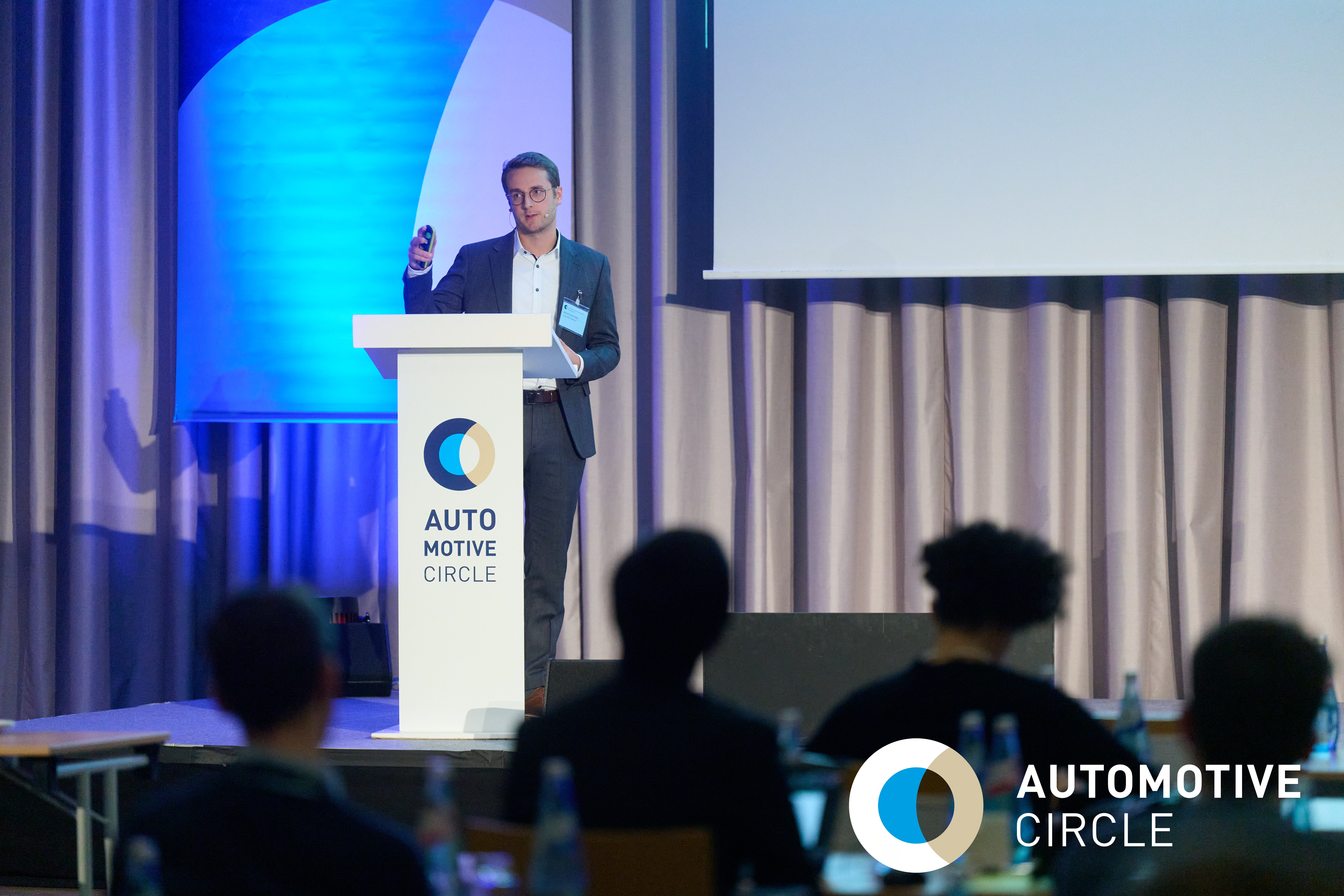
Two weeks later, from November 26–27, the conference “Sustainability for Product and Production Engineering”, organized by the Automotive Circle, was held in Bad Nauheim, bringing together international automobile manufacturers and supplier industries to exchange ideas on the topic of sustainability. This year’s focus was on circular value creation and the decarbonization of production routes for materials relevant to automotive construction. In his presentation “Scenario-based Life Cycle Assessment of Lightweight Structures,” Moritz Ostermann demonstrated how future developments in the value chain system for manufacturing lightweight components can be integrated into sustainability assessments using scenarios to improve decision-making in product and strategy development. Among other things, developments in steel, aluminum, and plastic production routes and their circularity were taken into account. The research results presented show that a wide range of measures across nearly all areas of the value chain is required in order to reduce greenhouse gas emissions over the lifecycle of lightweight components to levels compatible with current reduction targets set by industry and policymakers.
Overall, both conferences clearly showed that comprehensive efforts have been initiated in numerous sectors to reduce the environmental impacts of products and services. However, it also became apparent that significant research and development is still required in the areas of necessary technologies, as well as their implementation and holistic evaluation. There is broad agreement that collaboration between science and industry along the entire value chain is crucial for this. At LiA, we therefore aim to build upon the findings achieved together with our partners and to further advance research in the field of sustainability-oriented development and production of lightweight solutions.
Link zur Ecobalance: ecobalanceconference.org/index.html
Link zur Sustanability for Product and Production Engineering: www.automotive-circle.com/events/sustainability-in-product-and-production-engineering-2024/