Self-correcting production of roll-formed parts for drawer runners
Overview
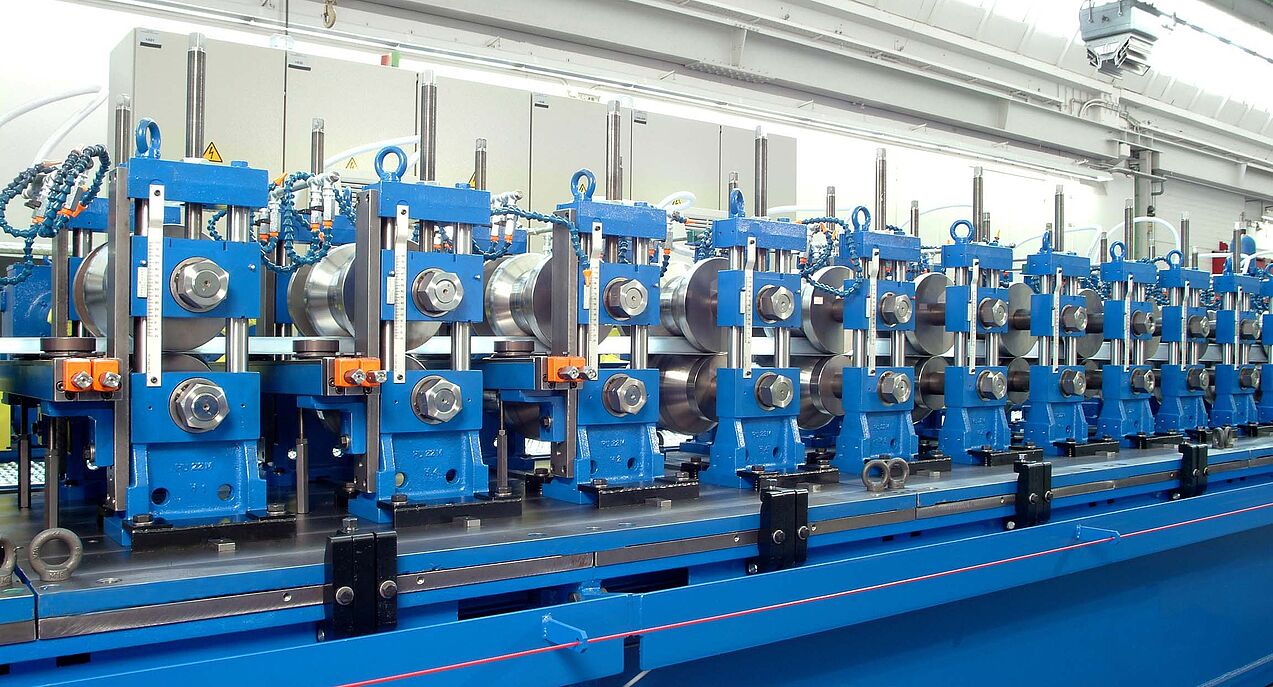
Due to increasing customer demands, products and production systems have to integrate more and more functions. This places high demands on the individual components and their interaction. This presents manufacturers with major challenges. On the one hand, they have to guarantee high quality and accuracy of the often very small parts that are produced in large quantities. On the other hand, they have to keep production costs low in order to remain competitive with rivals from Europe and Asia. In forming processes, such as the roll forming of guide rails for furniture, there is great potential for optimisation in order to guarantee the accuracy of the parts economically and minimise waste. This can be achieved by the machines recognising deviations in the process and in the materials independently and correcting themselves.
The purely mechanical roll forming process is characterised by slow, manual process corrections and fluctuating component quality. As part of the research project, self-correction technologies are to be implemented in the forming process by developing methods and hardware components. The focus is on process reliability and machine productivity.
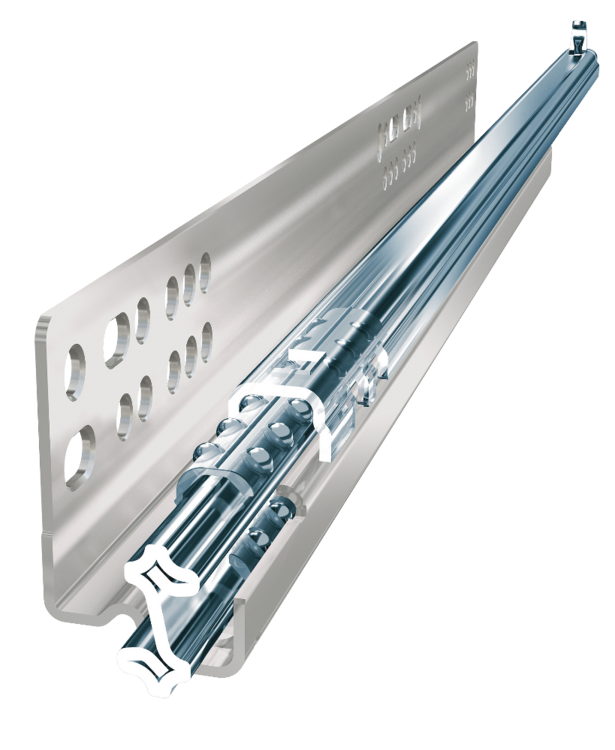
To this end, measurement technology is integrated into tools and machines that were previously purely mechanically controlled, which records fluctuations in production. An intelligent control system with algorithms for self-correction ensures that product requirements are continuously met. This draws on the services of the cross-sectional projects "Self-optimisation", "Intelligent networking" and "Systems engineering". The project results are implemented in close-to-production prototypes to demonstrate functionality. In addition, a design system is being developed in order to transfer the model to other manufacturing processes.
The innovative leap from mechanical to self-correcting forming processes will significantly increase the productivity and thus the resource efficiency of roll forming. A level of reliability and process safety is achieved that guarantees the quality of mass-produced products in the long term. The exemplary design system can be transferred to other manufacturing processes in the processing industry. It will be disseminated beyond the cluster by engineering and consulting companies. The project makes an important contribution to ensuring that production in Germany remains competitive.
Funding organisations
The project is sponsored by the Federal Ministry of Education and Research (BMBF).