Integrated modelling of the reliability and dynamic behaviour of mechatronic systems
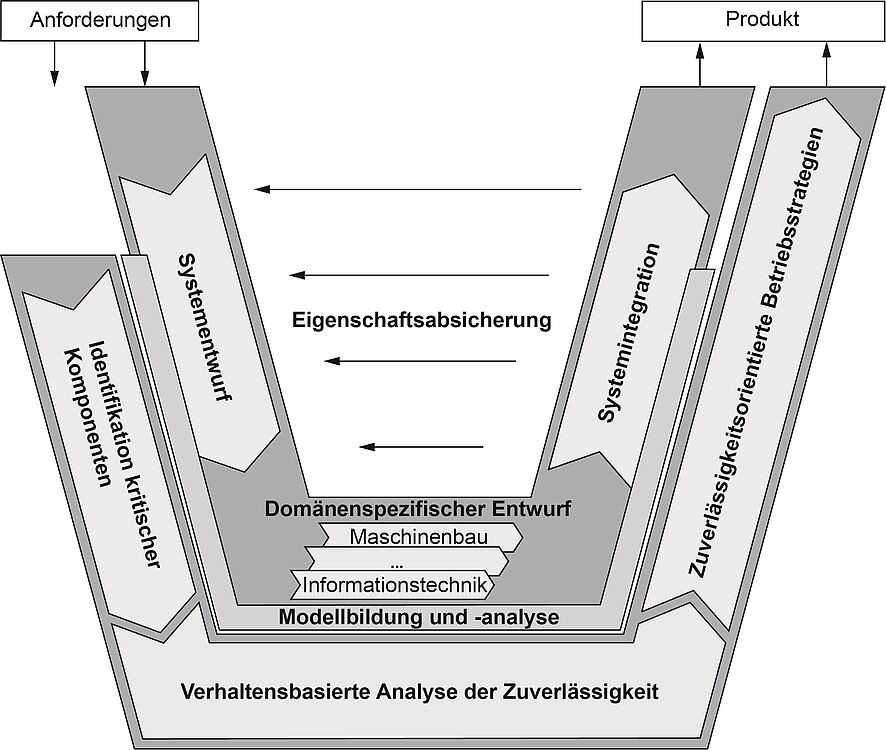
Digital transformation is shaping the development of intelligent technical systems, which offer a wide range of functions thanks to their connectivity and inherent intelligence. Self-optimising systems, as representatives of the class of intelligent systems, are characterised by the autonomous, goal-oriented adaptation of system behaviour. Mechatronic systems form one of the foundations of this class of systems, in that environmental and operating conditions, as well as system states, are detected by sensors and the dynamic system behaviour is influenced in a targeted manner. The wide range of functions offered by intelligent technical systems goes hand in hand with an increase in system complexity, which poses a challenge when it comes to ensuring reliability. In contrast, self-optimising systems in particular offer potential for increasing reliability. Implementing appropriate measures requires the development process to be supported by suitable methods. Managing this increasing system complexity is possible through the consistent use of existing models of the development process, but this is not utilised to the full in current methods. The aim is to ensure reliability from the early stages of development right through to the late life-cycle phases. A method is being developed for the integrated modelling of reliability – as the key parameter for reliability – and of dynamic system behaviour. Three application examples demonstrate that this method enables the development of measures to enhance reliability in self-optimising systems, is applicable to complex mechatronic systems, and supports the assurance of reliability during operation through the implementation of a digital twin.
You can purchase Dr Kaul’s doctoral thesis here:
His publications are listed here