
Hybrid modelling of dynamic systems
Accurately predicting the dynamic behaviour of technical systems using physical modelling approaches poses a challenge in cases where the mechanisms at work can only be modelled at great expense. This is the case, amongst other things, with friction phenomena, which introduce non-linear, dissipative components into the system’s behaviour. Detailed modelling approaches are usually associated with a high degree of complexity and application-specific requirements. Where physical models are not available or can only be implemented at great expense, models based on machine learning techniques can provide a solution. Combining both approaches into a hybrid model enables the efficient modelling of dynamic systems.
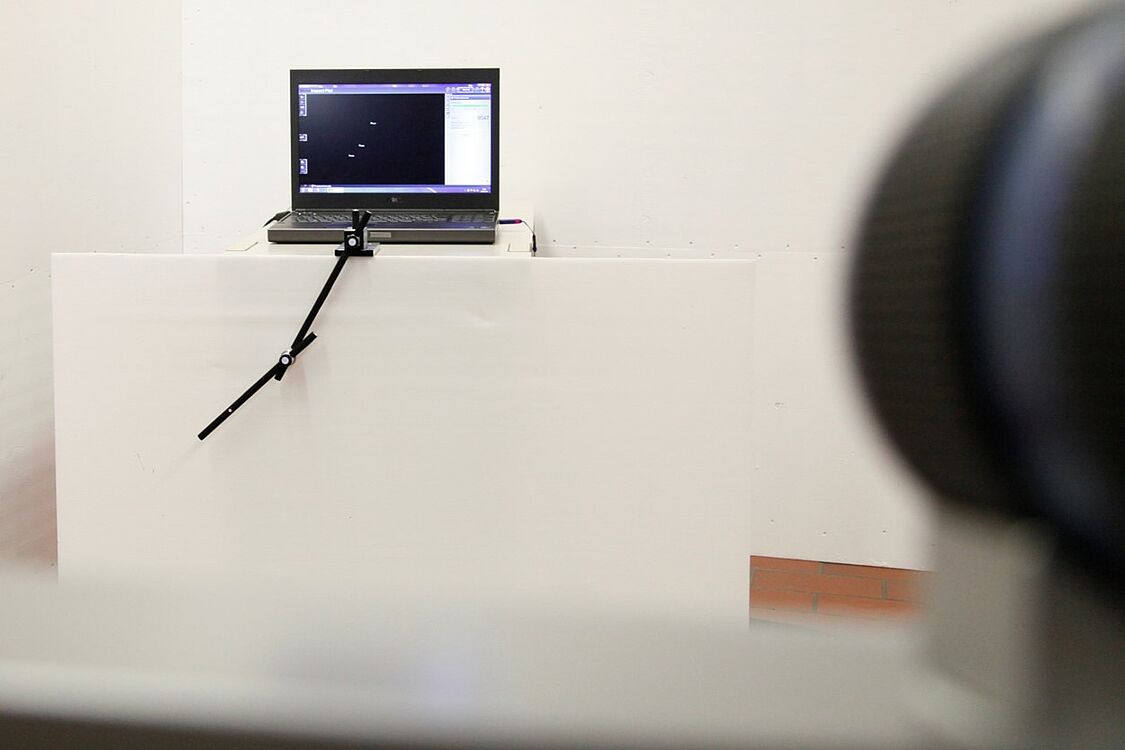
The starting point is the modelling and validation of the dynamic behaviour of a double pendulum with adjustable friction at the joints. To this end, the mass and stiffness distributions of the double pendulum have already been identified and incorporated into a physical model. This model is extended using machine learning techniques to include a sub-model for representing the dissipative components.
As part of the DFG-funded project ‘Hybrid Modelling for the Data-Driven Multi-Objective Optimisation of Multi-Body Systems’, the hybrid modelling methodology is being extended to general multi-body systems and applied to multi-objective optimisation. Here, too, the double pendulum serves as an initial example. The methodology developed is then applied to a (multi-link) rear axle. The detailed axle model already available at the department serves as a template for this.
Contact person
Meike Wohlleben
Faculty of Mechanical Engineering » Dynamics and Mechatronics (LDM)
Pohlweg 47-49
33098 Paderborn
Office hours
by appointment