Control of the reliability of mechatronic systems
Reliability-adaptive systems allow the system’s behaviour to be adjusted based on its current reliability. This enables you to balance its service life and performance against one another depending on the situation. This can be used to adapt failure behaviour to a maintenance schedule, thereby increasing availability and fully exploiting the system’s potential. To enable the implementation of such an adaptation, a control algorithm independent of a wear model is required.
A reliability controller based on the health index – a measure of system wear – was developed by Dr Tobias Meyer as part of his PhD research. The control system utilises self-optimisation as a means of implementing this behavioural adaptation. This is based on the selection of objectives that the system pursues. Possible operating points are calculated in advance using multi-objective optimisation techniques. The controller sets the priority of objectives, thereby balancing reliability against performance.
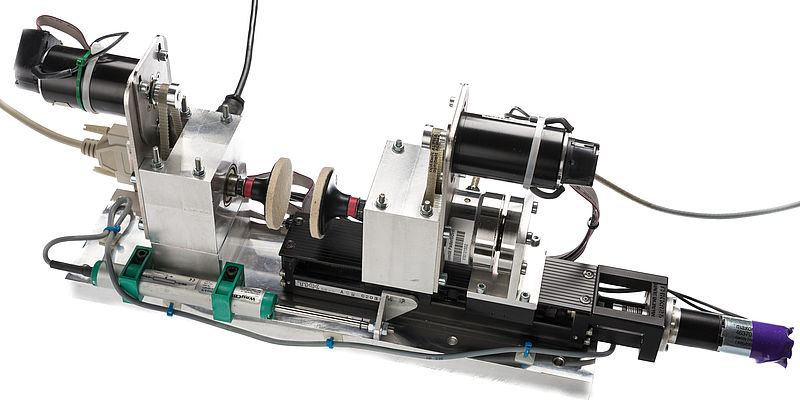
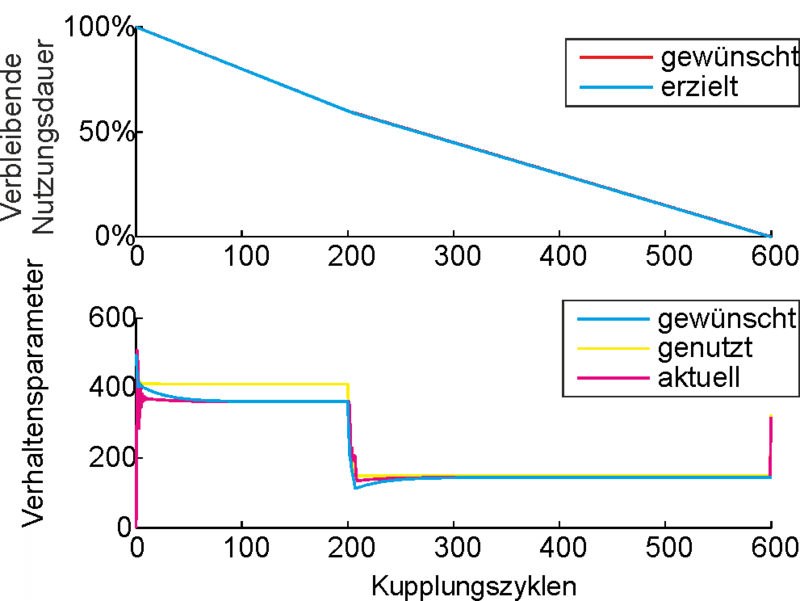
An automatic single-disc dry clutch is introduced as an example application. The reliability controller is fully implemented and service life experiments are carried out. Results show that the variation in downtime can be significantly reduced, making failure behaviour more predictable. At the same time, the desired service life can be increased at the expense of performance in order to achieve extended maintenance intervals. The reliability-adaptive system thus enables better utilisation of system performance and improved maintenance planning. A detailed description can be found here.
Dr. Amelie Bender
Faculty of Mechanical Engineering » Dynamics and Mechatronics (LDM)
Pohlweg 47-49
33098 Paderborn
Office hours
Currently no, please contact Osarenren Aimiyekagbon, my deputy